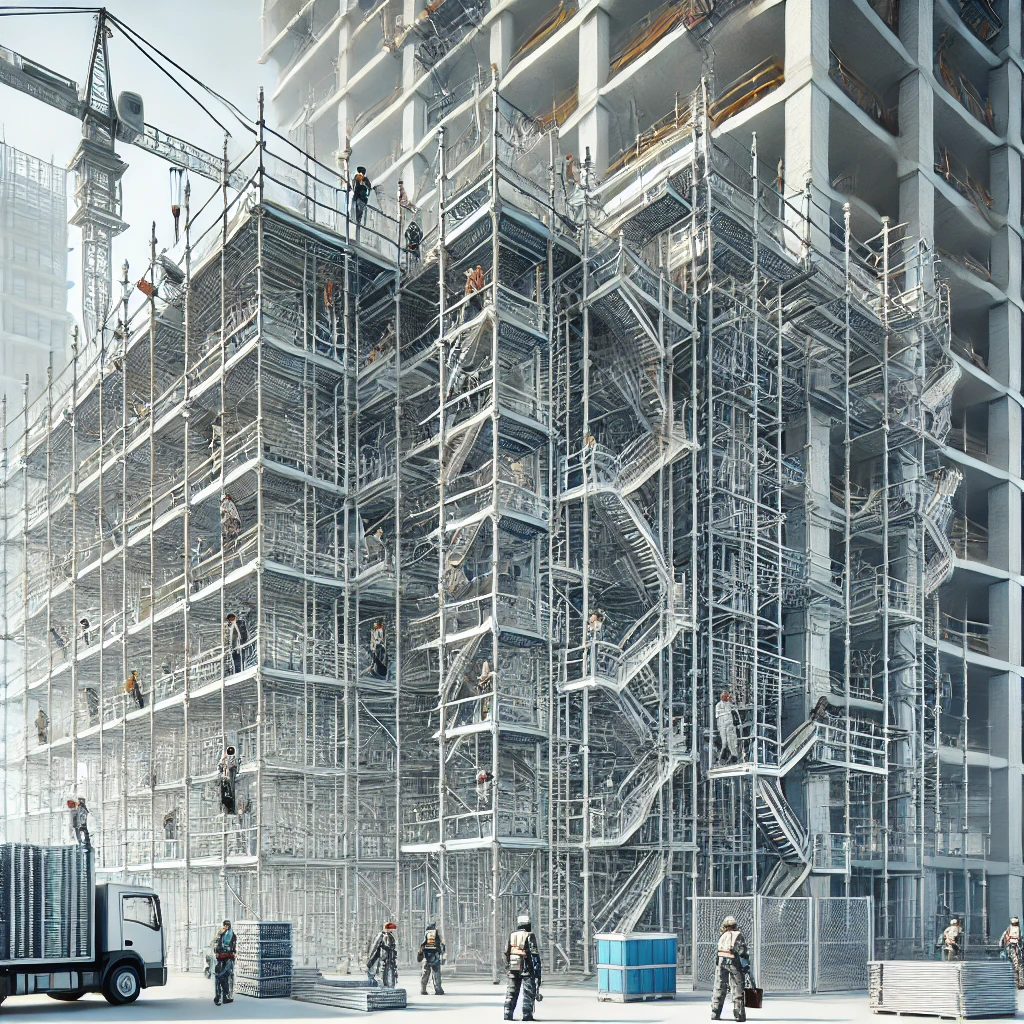
The Importance and Evolution of Scaffolding in Construction
Scaffolding plays an indispensable role in the construction industry, providing temporary support and access to workers engaged in building, maintenance, and repair activities. Over centuries, scaffolding has evolved from rudimentary wooden structures to sophisticated systems made from steel, aluminum, and even modern composite materials. Understanding scaffolding’s history, types, safety measures, and advancements is essential for appreciating its significance in modern construction.
A Historical Perspective on Scaffolding
Scaffolding has been in use since ancient times, dating back to the construction of the pyramids in Egypt and the Great Wall of China. Early civilizations relied on wooden scaffolding tied together with rope to create platforms and ladders. The Greeks and Romans improved upon these designs by incorporating iron and using more stable construction techniques.
During the Middle Ages, scaffolding became more standardized, with medieval architects employing a modular approach to construct cathedrals and castles. The Industrial Revolution marked a turning point in scaffolding technology, with the introduction of metal tubes and couplers, which increased strength, durability, and reusability. Today, scaffolding systems are engineered with high precision, taking into account safety standards, material efficiency, and adaptability.
Types of Scaffolding
There are several types of scaffolding used in modern construction, each serving different purposes and project requirements:
Single Scaffolding: Also known as bricklayer’s scaffolding, this type consists of a single framework placed parallel to the wall, supported by standards, ledgers, and putlogs. It is commonly used for brick masonry work.
Double Scaffolding: Also called mason’s scaffolding, it is used for stone masonry work where holes cannot be drilled into walls for support. It consists of two rows of scaffolding, making it more stable.
Cantilever Scaffolding: In this system, standards are not placed on the ground but are supported by a series of needles protruding from the structure. It is useful when ground conditions are unsuitable for standard scaffolding.
Suspended Scaffolding: This type consists of platforms suspended from roofs or upper floors using ropes or chains. It is commonly used for painting, window cleaning, and exterior maintenance of tall buildings.
Trestle Scaffolding: Consisting of movable ladders or tripods supporting a working platform, trestle scaffolding is ideal for indoor work such as plastering or painting.
Steel Scaffolding: Made from steel tubes joined with couplers, this scaffolding is durable, fire-resistant, and suitable for large-scale projects where high strength and safety are required.
Modular Scaffolding: Also known as system scaffolding, it involves pre-engineered components that fit together in a specific way, improving speed, safety, and flexibility in construction projects.
Safety Measures and Regulations
Given that scaffolding-related accidents are a major concern in construction, adherence to strict safety protocols is critical. Several regulatory bodies, including the Occupational Safety and Health Administration (OSHA) in the U.S. and the Health and Safety Executive (HSE) in the U.K., set standards to ensure safe scaffolding practices.
Some key safety measures include:
Proper Training: Workers must be trained in erecting, using, and dismantling scaffolding safely.
Inspection: Regular inspections should be conducted to check for damaged or weakened components.
Load Capacity Compliance: Scaffolding should never exceed its maximum load-bearing capacity.
Guardrails and Toe Boards: These prevent workers and materials from falling.
Stabilization: Scaffolding should be anchored or braced properly to prevent tipping over.
Personal Protective Equipment (PPE): Workers should wear helmets, harnesses, gloves, and non-slip footwear.
Advancements in Scaffolding Technology
The construction industry continues to innovate in scaffolding technology, enhancing efficiency, safety, and environmental sustainability. Some modern advancements include:
Lightweight Materials: The introduction of aluminum and composite materials has made scaffolding easier to assemble and transport while maintaining strength.
Smart Scaffolding: Digital sensors embedded in scaffolding components can monitor structural integrity, detect weaknesses, and provide real-time safety alerts.
Prefabricated Systems: Modular scaffolding systems are pre-designed for specific projects, reducing installation time and human error.
Automated Scaffolding: Robotics and automation have been integrated into scaffolding systems, such as self-assembling platforms that adjust to different work heights.
Sustainable Scaffolding: Eco-friendly materials and recycling initiatives have been introduced to reduce the environmental impact of scaffolding waste.
The Future of Scaffolding
The future of scaffolding will likely see continued innovation in materials, automation, and safety monitoring. 3D-printed scaffolding components, AI-driven safety analytics, and drone-assisted inspections could become standard in the industry. Additionally, the integration of virtual reality (VR) and augmented reality (AR) for worker training will improve competency and preparedness for working at heights. https://www.albawadimetals.com/